
Handbags
Moroccan leather accompanies. The patina bears witness. Each day leaves its mark.

July 21, 2026 • Reading time: 6 minutes
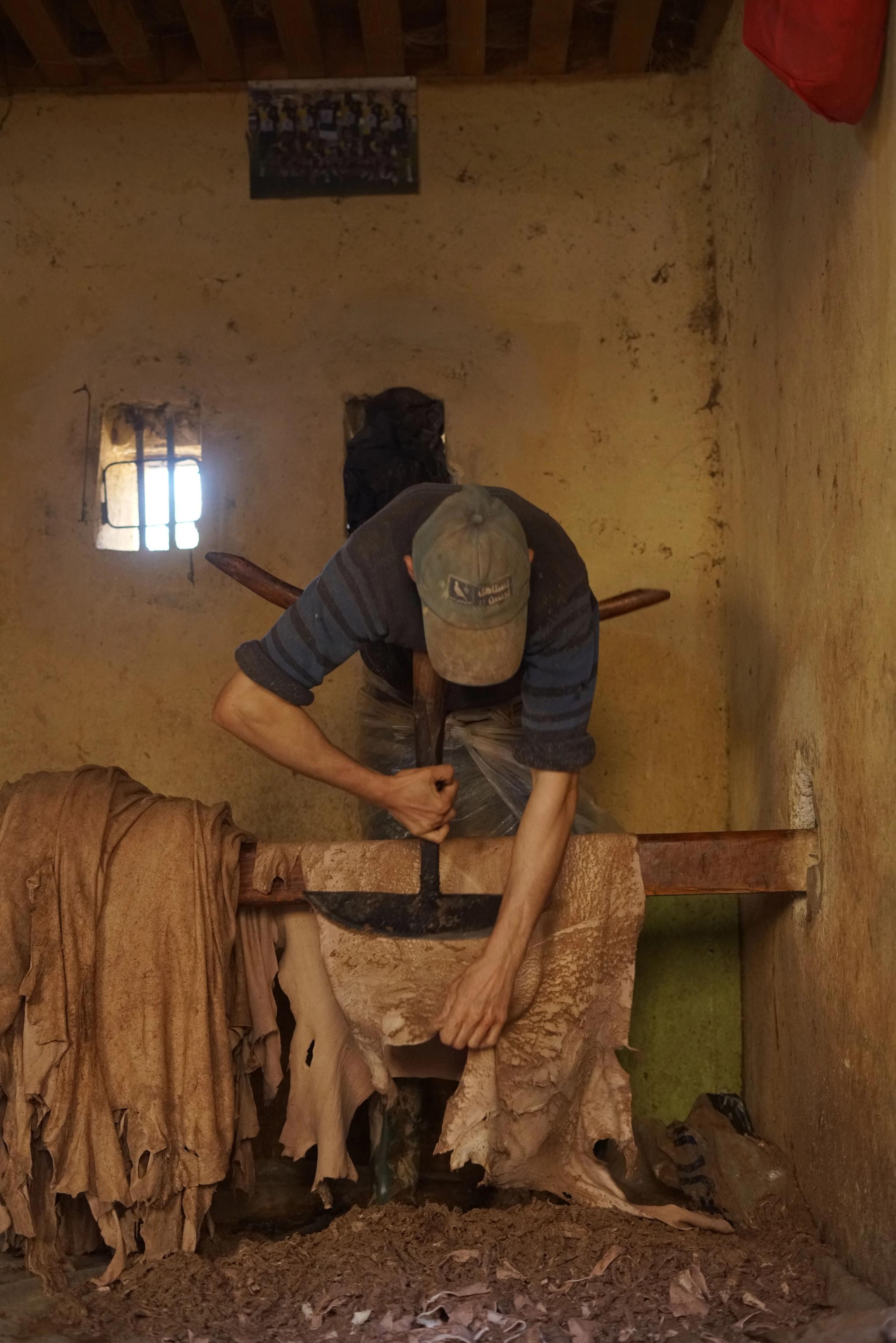
Somewhere in every leather purchase, there's a pause. You see a handmade, full-grain bag next to a factory one that looks, at a glance, almost the same — and the handmade one costs three or four times as much. The instinct is to wonder whether you're being overcharged.
It's a fair question. It just has an honest answer, and most sellers never give it, because the honest answer requires showing you exactly where the money goes. So let's do that. Not "trust us, it's worth it" — an actual breakdown of what your money buys in a handmade leather piece, and why the cheaper option so often turns out to be the expensive one.
Start with the cheaper bag, because its real cost is hidden.
A factory bag made from coated, chrome-tanned leather is built to a price, not to a lifespan. It looks its best on day one and goes downhill from there — the coating cracks at the folds, the corners wear through, the stitching loosens. Within a year or two, it's tired. Within three, it's replaced.
Now do the arithmetic most people skip. A bag that costs a quarter as much but lasts a fifth as long isn't cheaper. It's more expensive per year you carry it — and that's before you count the two or three replacements, the waste, and the simple fact that you never actually loved any of them.
A handmade leather bag inverts this. The higher number on the tag is a one-time cost for something you'll carry for a decade or more, that looks better the longer you own it. The price isn't high. It's just honest about what it takes to last.
When you pay for handmade leather, you're paying for three real, countable things. None of them are markup. All of them are the reason it survives.
A handmade piece starts with full-grain leather — the complete, unsanded top layer of the hide, the strongest part, kept intact. Full-grain costs more than the split, sanded, plastic-coated "genuine leather" that fills the low end of the market, because there's less of it and it can't hide flaws under a printed finish.
Then there's the tanning. Genuine vegetable tanning — the method Morocco's tanneries have used for centuries — takes weeks, using plant tannins in a slow, skilled process. Chrome tanning does a rougher version of the same job in days, with chemicals, at a fraction of the cost. You are paying for weeks of craft where the cheaper bag paid for days of chemistry. (We go deeper on this in how to buy authentic Moroccan leather.)
This is the cost people underestimate most. A handmade bag isn't stamped out in seconds by a machine — it's cut, edged, and stitched by a trained artisan over many hours. A single bag can take the better part of a working week from cut to finish.
Hand saddle-stitching alone — two needles, one seam, every stitch locked so that if one breaks the rest hold — is slower than machine stitching by an order of magnitude, and far stronger. When you pay for handmade, you are literally paying for time: the hours of a person who spent years learning to do this well.
Here's the part most brands hope you won't think about. In a lot of the leather market, the person who actually made the object earns the smallest slice of what you pay — sometimes a wage that can't sustain the craft, which is exactly why so many traditions are dying out.
A fairly made piece pays its maker properly. That's not a cost to apologise for; it's the whole point. A price that supports the artisan is the only kind of price that keeps the craft alive long enough to make the next piece.
Most sellers ask you to take the "it's worth it" on faith. We'd rather show you.
At Morazon, we publish how the price divides — how much of what you pay the artisan actually keeps. We take a transparent commission and no hidden margin, and we say so on the piece itself. We do it because the maker's share isn't a detail to bury; it's the reason the price is what it is. When you can see that the money reaches the hands that did the work, "expensive" stops being the right word. The word is fair.
We also never discount, and that belongs in this conversation too. A discount on handmade work doesn't come from nowhere — it comes out of the material, the time, or the maker's share. There's nothing to cut here without cutting one of the three things you're actually paying for. So we don't.
To be fair to the factory bag: it isn't a scam. It's a genuine trade-off, and it's worth naming honestly.
Machine production is cheaper because it removes things — the weeks of tanning, replaced by days; the hours of hand-stitching, replaced by seconds; the full-grain hide, replaced by a coated split; the fairly paid maker, replaced by a production line. Each removal saves money. Each one also removes a reason the object would have lasted.
That's a real choice, and for some things it's the right one. But for a bag you want to carry for years — one you'd be sad to lose — the cheaper version quietly removes exactly the parts you were hoping to buy.
The honest summary is short. Handmade leather costs more up front because it contains more: a better hide, weeks of tanning instead of days, hours of skilled hands instead of machine seconds, and a maker who's actually paid. Cheaper leather costs less today and more over the years — in replacements, in waste, and in never owning something worth keeping.
Buy the real thing once, care for it simply, and it outlasts every cheaper bag you'd have bought in its place — growing softer, darker, and more yours the whole time. That's not the expensive option. It only looks that way for a moment, at the price tag, before the years do the math for you.
Explore the Morazon collection → — full-grain, vegetable-tanned, made by a named artisan, priced honestly.
Want to choose your first piece with confidence? Start with our guide to choosing a Moroccan leather bag that lasts.
Share this article


&media=https%3A%2F%2Fcdn.sanity.io%2Fimages%2Fkfxq7yow%2Fproduction%2F112122a9d83a460e388f56bab0fea82909f143f7-5304x7952.jpg)
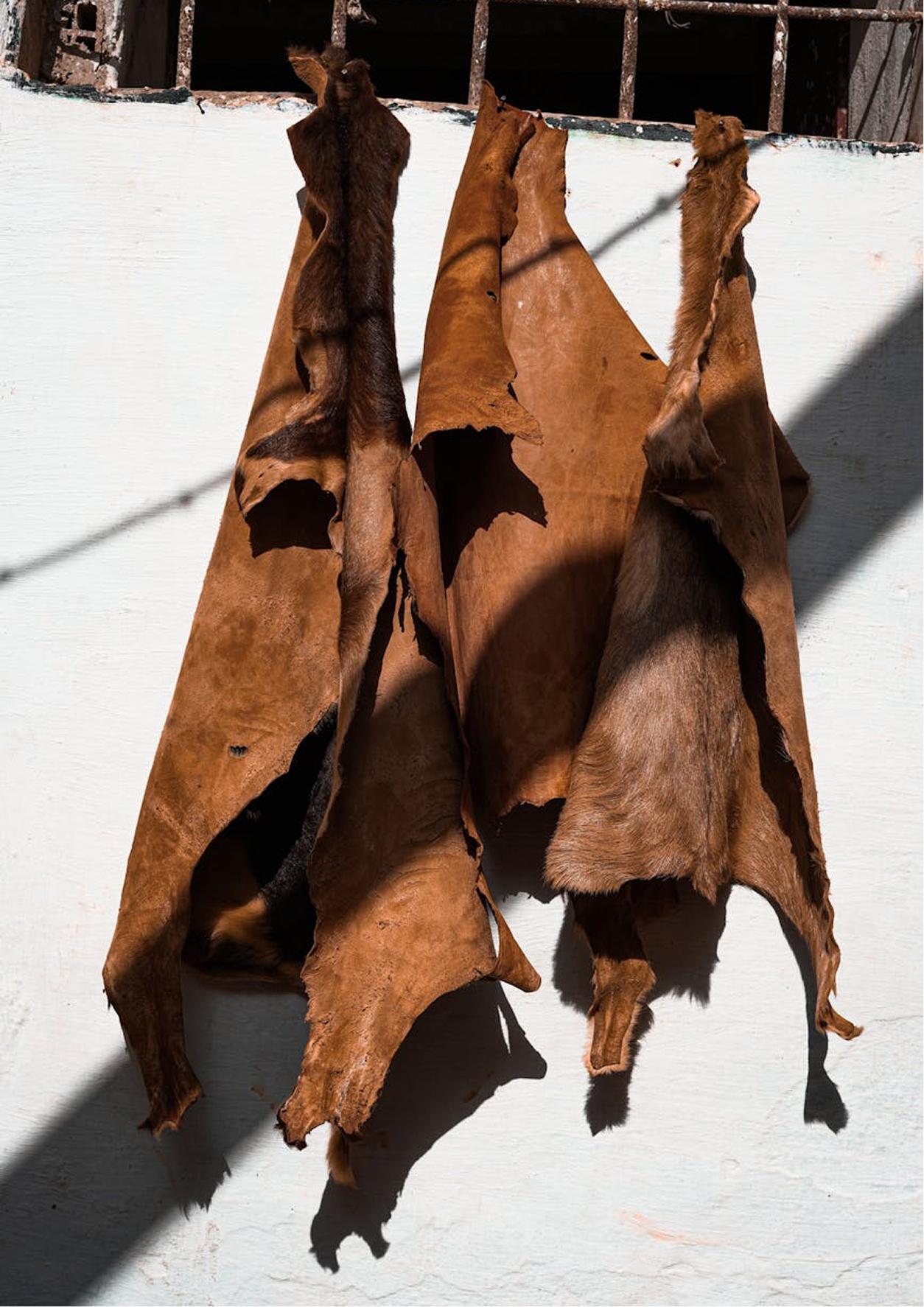
Learn to tell genuine vegetable-tanned Moroccan leather from imitation — the 7 tests, the red flags, and the proof to demand before you buy.
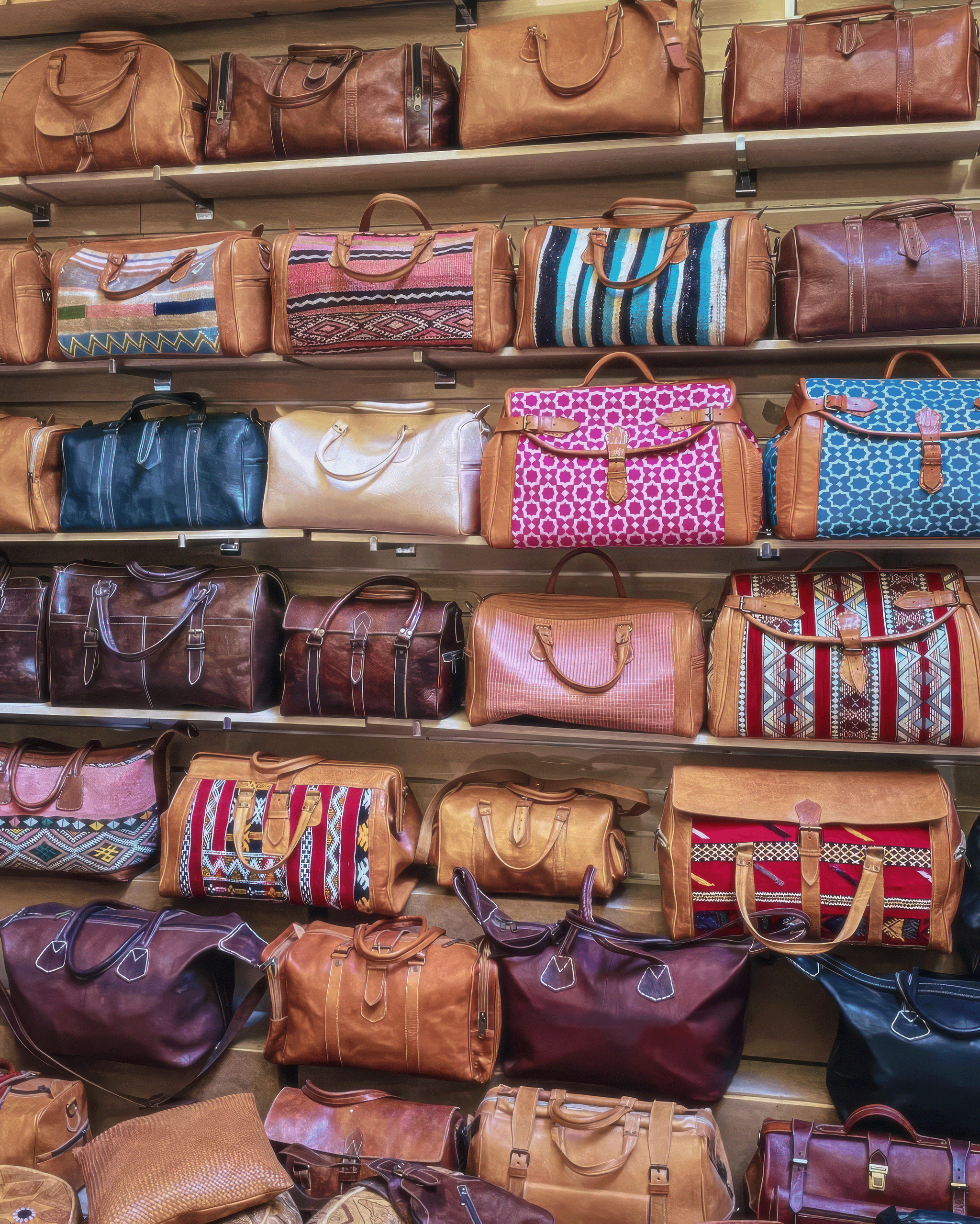
A buyer's guide to Moroccan leather bags — which style fits your life, what a fair price buys, and how to pick one that ages for decades instead of seasons.

